A Culinary Journey Across the Neighbourhood
I have always believed that food has no borders.
For me, a restaurant is not merely a place where recipes are cooked and served. It can also become a window into a culture, a country’s history and the lives of its people. This belief has shaped much of my culinary journey—from researching the food traditions of the Indian subcontinent to creating trails that celebrate regional cuisines.
When I began looking more closely at the cuisines of India’s neighbouring countries, I was fascinated by how much they had in common with us—and, at the same time, how wonderfully different they could be.
One such discovery was Ceylon, modern-day Sri Lanka.
The island’s cuisine is a beautiful meeting point of indigenous Sri Lankan traditions, South Indian influences, colonial history and the abundance of the tropical island. Coconut, rice, curry leaves, chillies, cinnamon, pandan, seafood, aubergine and an extraordinary variety of spices come together in ways that are bold, aromatic and deeply comforting.
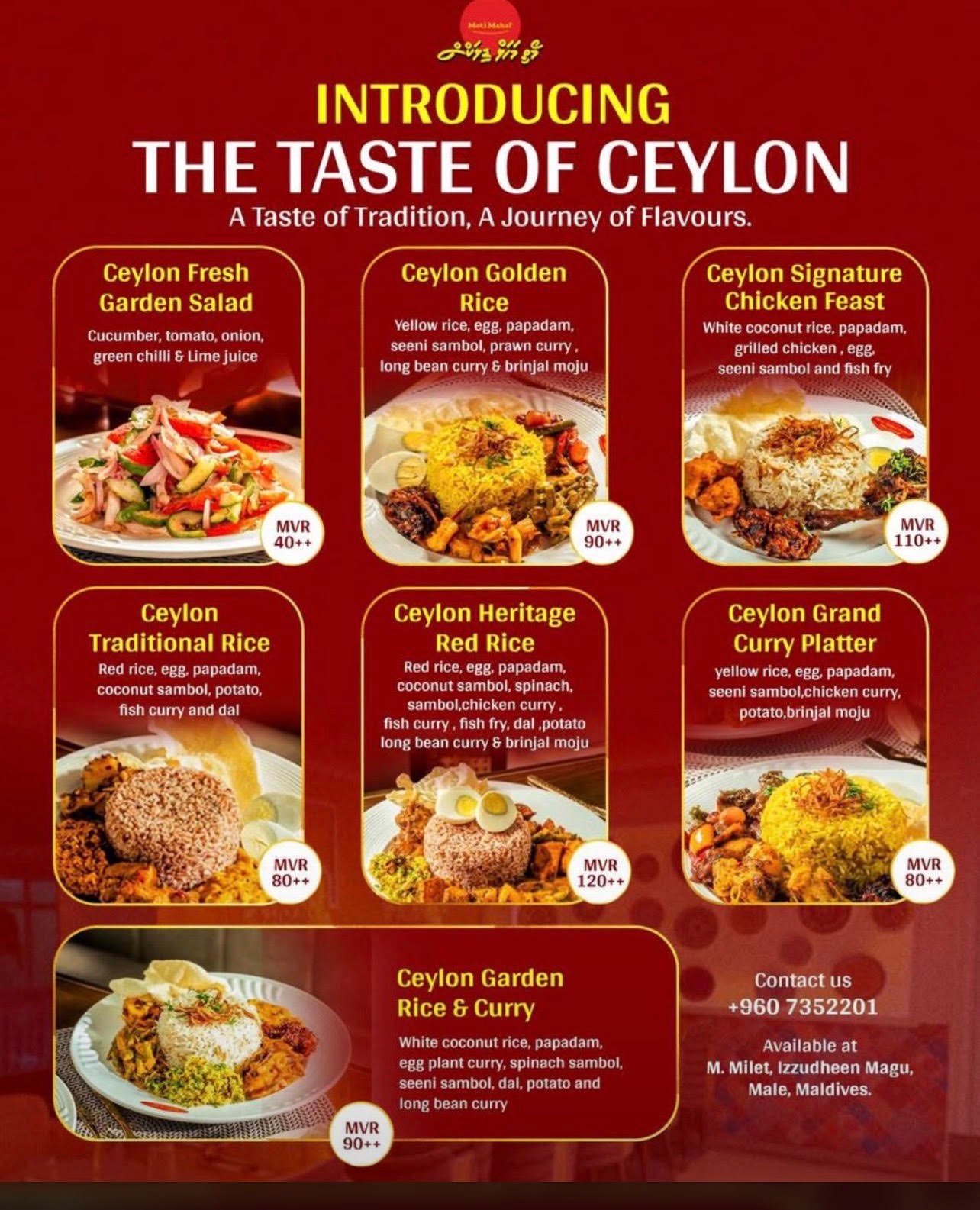
That exploration eventually found its way onto the menu of Moti Mahal Maldives, where we curated a special Sri Lankan/Ceylonese feast to celebrate our culinary neighbourhood.
For me, it was more than a themed menu.
It was a celebration of our neighbours.
From the Indian Subcontinent to Ceylon
Growing up with the culinary legacy of Moti Mahal, I have always been fascinated by how recipes travel.
The story of Indian food itself is a story of movement—of people, spices, traders, travellers and ideas crossing geographical boundaries. The same is true of Sri Lankan food.
Sri Lanka’s position in the Indian Ocean made it a crossroads of cultures. Its cuisine absorbed influences while retaining a distinctive identity of its own.
The use of coconut is particularly striking. Coconut milk gives curries a richness that is completely different from the dairy-based gravies familiar to many North Indians. Roasted spices bring depth, while curry leaves, pandan and cinnamon create an unmistakable Sri Lankan aroma.
And then there are the sambols—small but powerful accompaniments that can transform an entire meal.
As I researched these dishes, I realised that the best way to understand a cuisine is not simply to read about it.
You have to cook it.
Curating a Ceylonese Feast at Moti Mahal Maldives
At Moti Mahal Maldives, I wanted the guest to experience Sri Lanka not as a single dish but as a complete culinary journey.
The menu brought together rice, curries, seafood, vegetables and sambols—each with its own character.
There was Ceylonese Yellow Rice, fragrant with spices and aromatics.
There was Brinjal Moju, where fried aubergine meets the sweet, sour and spicy flavours that make Sri Lankan cooking so distinctive.
There was Long Bean Curry, a simple vegetable preparation transformed by coconut and spices.
The seafood element came alive through a fragrant Sri Lankan Prawn Curry.
And no Sri Lankan feast, in my view, would be complete without Seeni Sambol, the caramelised onion relish whose sweet-spicy character brings balance to the plate.
What I loved most was the way these dishes worked together.
Sri Lankan food is not necessarily about one dish dominating the table. It is about creating a balance of flavours, textures, aromas and temperatures.
A spoonful of rice, a little curry, some sambol and perhaps a piece of vegetable can create an entirely different experience from eating each preparation separately.
That is the magic of a shared feast.
Brinjal Moju
Brinjal Moju is one of those dishes that immediately caught my attention.
Aubergine—or brinjal, as we call it in India—is familiar to all of us, but the Sri Lankan treatment is quite different.
The aubergine is fried until beautifully browned and then combined with onions, chillies, vinegar and spices. The result is simultaneously sweet, sour, spicy and savoury.
Ingredients
- 2 large aubergines, cut into strips
- 1 large onion, sliced
- 3–4 green chillies, slit
- 2–3 cloves garlic, finely chopped
- 1 teaspoon mustard seeds
- ½ teaspoon turmeric
- 1 teaspoon chilli powder
- 1 tablespoon sugar
- 3 tablespoons vinegar
- Salt to taste
- Oil for frying
Method
Season the aubergine with salt and turmeric and fry until golden brown. Drain and keep aside.
In a pan, heat a little oil and crackle the mustard seeds. Add garlic, onions and green chillies and cook until the onions soften.
Add chilli powder, sugar and vinegar. Stir gently and allow the mixture to come together.
Finally, fold in the fried aubergine.
The finished dish should have a lovely balance of sweetness, acidity, heat and the richness of fried aubergine.
Ceylonese Yellow Rice
Rice is at the heart of Sri Lankan food, and yellow rice is one of the most beautiful expressions of it.
Unlike a heavily spiced biryani, Ceylonese yellow rice is about fragrance and elegance.
Ingredients
- 2 cups basmati or long-grain rice
- 2½ cups water or light stock
- ½ cup coconut milk
- 1 small onion, sliced
- 2 tablespoons ghee or oil
- 1 cinnamon stick
- 3–4 cardamom pods
- 3–4 cloves
- 1 teaspoon turmeric
- A few curry leaves
- Salt to taste
Method
Wash and drain the rice.
Heat ghee or oil and gently fry the onion with cinnamon, cardamom, cloves and curry leaves.
Add the rice and turmeric and sauté gently for a minute.
Add water, coconut milk and salt. Bring to a boil, then cover and cook over low heat until the rice is tender and fluffy.
Allow it to rest for a few minutes before gently fluffing it with a fork.
The result is a golden, aromatic rice that makes the perfect companion to Sri Lankan curries.
Long Bean Curry
One of my favourite discoveries was how beautifully Sri Lankan cuisine treats everyday vegetables.
Long beans are cooked with coconut, spices and aromatics to create a dish that is simple yet incredibly satisfying.
Ingredients
- 250 g long beans, cut into pieces
- ½ cup coconut milk
- 1 small onion, sliced
- 2 green chillies
- 1 teaspoon mustard seeds
- ½ teaspoon turmeric
- ½ teaspoon cumin
- Curry leaves
- Salt to taste
- 1 teaspoon coconut oil
Method
Heat coconut oil and crackle the mustard seeds.
Add onion, green chillies and curry leaves and sauté gently.
Add the long beans, turmeric, cumin and salt.
Cook until the beans are tender but retain some bite.
Add coconut milk and simmer gently for a few minutes.
It is a wonderful example of how Sri Lankan cooking can turn an everyday vegetable into something memorable.
Sri Lankan Prawn Curry
Being surrounded by the Indian Ocean, Sri Lanka naturally has a remarkable seafood tradition.
The Sri Lankan prawn curry combines the sweetness of prawns with coconut milk and warm spices.
Ingredients
- 500 g prawns, cleaned
- 1 cup coconut milk
- 1 onion, sliced
- 2 tomatoes, chopped
- 2 green chillies
- 1 teaspoon turmeric
- 1 teaspoon chilli powder
- 1 teaspoon roasted curry powder
- ½ teaspoon cumin
- Curry leaves
- A small piece of cinnamon
- 1 tablespoon oil
- Salt to taste
Method
Marinate the prawns with turmeric and salt.
Heat oil and sauté the onion, curry leaves, cinnamon and green chillies.
Add tomatoes and cook until soft.
Add the spices and stir briefly.
Pour in the coconut milk and bring it to a gentle simmer.
Add the prawns and cook only until they are just done.
The curry should remain fragrant and creamy without overcooking the seafood.
Seeni Sambol
Seeni Sambol was another dish that fascinated me.
The word seeni refers to sugar, and this sambol beautifully demonstrates Sri Lankan cuisine’s love of balancing sweet, spicy and savoury flavours.
Ingredients
- 3 large onions, finely sliced
- 2–3 teaspoons chilli powder
- 1 teaspoon Maldive fish flakes, optional
- 1 teaspoon tamarind pulp
- 1–2 teaspoons sugar
- 1 small piece cinnamon
- Curry leaves
- Salt to taste
- 2 tablespoons oil
Method
Heat the oil and cook the onions slowly until deeply golden and caramelised.
Add cinnamon, curry leaves and chilli powder.
Add tamarind, sugar and salt and continue cooking gently.
If using Maldive fish, add it towards the end.
The sambol should be rich, dark and intensely flavoured.
It can be served alongside rice, curries, bread or even simply enjoyed as an accompaniment to a Sri Lankan breakfast.
Food Has No Borders
My research into Ceylonese cuisine reminded me of something I have experienced throughout my culinary life:
Neighbours may have different languages, histories and traditions, but their kitchens often speak a remarkably similar language.
India and Sri Lanka have centuries of culinary connections. Rice, coconut, spices, chillies, lentils, seafood and vegetables appear in both cuisines, yet each culture has developed its own techniques and flavour combinations.
That is what makes exploring neighbouring cuisines so exciting.
At Moti Mahal, our responsibility is not only to preserve the culinary heritage that came to us through Kundan Lal Gujral and the legendary traditions of Peshawar and Delhi. I also believe that a restaurant can be a place where cultures meet.
Our Ceylonese/Sri Lankan feast at Moti Mahal Maldives was created in that spirit.
I searched for recipes, studied the ingredients and cooking traditions, and then worked on bringing those flavours to our guests—not to change them into something else, but to allow people to experience the character of another culture through food.
Celebrating Our Culinary Neighbourhood
I call this approach celebrating the neighbourhood.
Our culinary neighbourhood extends far beyond the boundaries of our own country. From Sri Lanka and Nepal to Bangladesh, Bhutan, Maldives and beyond, every neighbouring cuisine has stories waiting to be discovered.
And perhaps that is one of the most beautiful things about food.
A border may divide countries on a map.
But a shared table brings people together.
At Moti Mahal Maldives, we wanted our guests to travel to Ceylon without leaving their table—to taste its spices, its coconut, its rice, its seafood and its sambols, and to discover a little more about the island we call Sri Lanka.
For me, this was not simply a festival menu.
It was another chapter in my continuing search for the stories of food.
Because every recipe has a journey.
And sometimes, the most interesting journeys begin with the neighbours next door.
— Monish Gujral
Restaurateur | Chef | Food Writer | Custodian of Indian Culinary Heritage