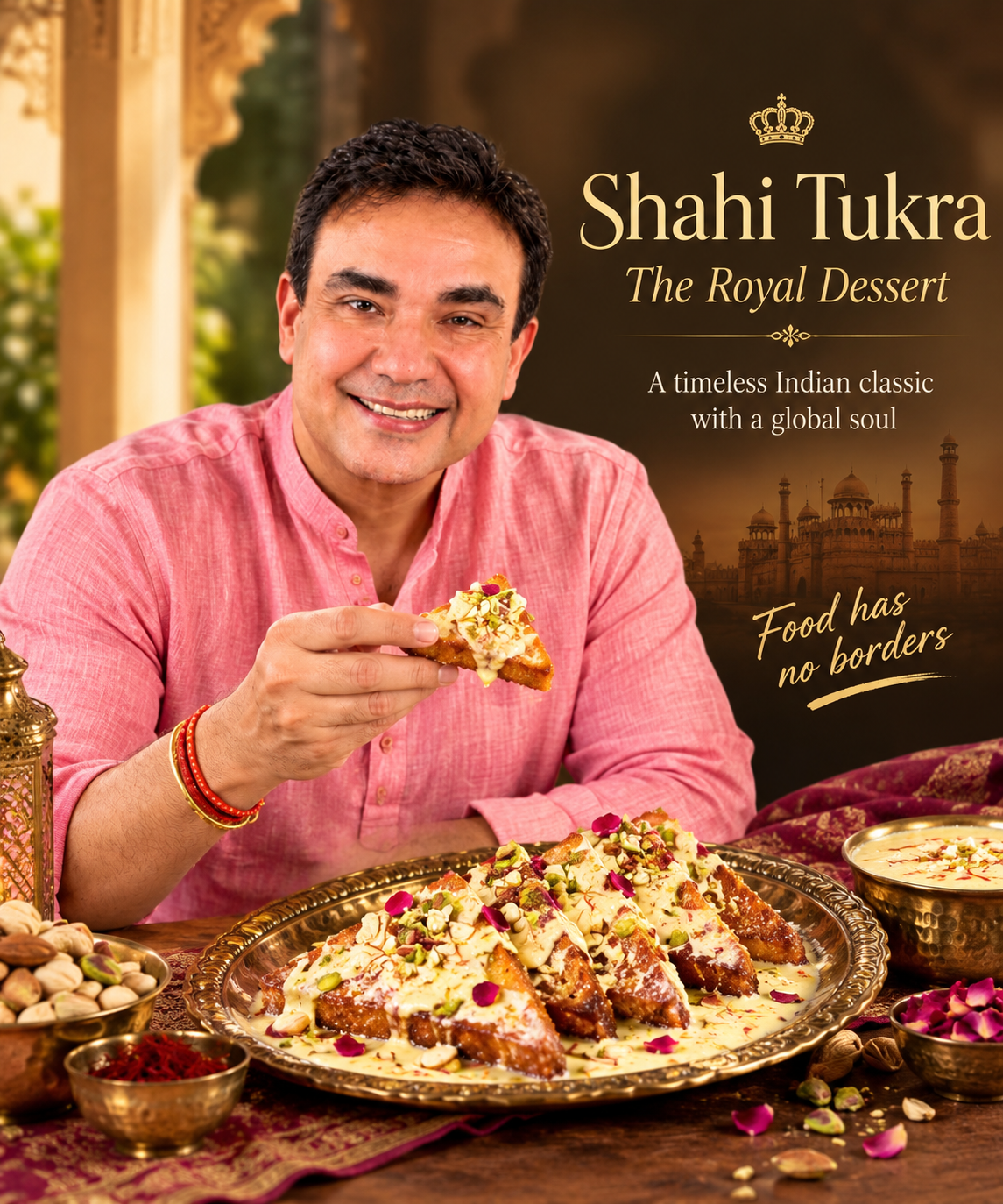
By Monish Gujral
There is something wonderfully ingenious about Indian cuisine: it can take the simplest ingredients and transform them into a dish fit for a king. Shahi Tukra is one such creation. Made with bread, milk, sugar, ghee, nuts and fragrant spices, this much-loved dessert is a beautiful example of how culinary imagination can turn humble ingredients into something extraordinary.
As someone who has spent a lifetime exploring food, its history and its evolution across cultures, I have always believed that food has no borders. Recipes travel with people, trade, migration and memory. When they reach a new land, they adapt to the ingredients available, the local climate, geography and the preferences of the people who embrace them.
To me, Shahi Tukra is not just a royal Indian dessert. It is also an opportunity to reflect on how different cultures can arrive at similar culinary ideas while giving them their own distinctive identities.
The meaning and history of Shahi Tukra
The name itself tells a story. Shahi means royal, while tukra refers to a piece or morsel. Together, Shahi Tukra evokes the idea of a royal indulgence, and one can easily understand why this dessert became associated with the grandeur of Mughal-inspired cuisine.
Its exact inventor and date of origin, however, remain uncertain. Like many historic Indian dishes, Shahi Tukra appears to belong to a wider culinary tradition that evolved through the exchange of ingredients, techniques and ideas rather than being the creation of one identifiable cook on a particular day.
The Mughal period left a lasting impression on the food of the Indian subcontinent. Royal kitchens brought together skilled cooks, elaborate techniques, aromatic spices, dried fruits, nuts and rich dairy preparations. Desserts were often designed not merely to satisfy the appetite but also to demonstrate hospitality, abundance and refinement.
Shahi Tukra is popularly associated with this culinary world. Its rich combination of fried bread, thickened milk, sugar, cardamom, saffron and nuts fits naturally into the traditions of celebratory North Indian cuisine.
Its close relative, Double Ka Meetha, is particularly loved in Hyderabad, where fried bread is combined with sweetening agents and a rich milk preparation. Although the two desserts share many characteristics, their regional traditions and methods can differ.
It is tempting to attribute Shahi Tukra to a particular Mughal emperor, but there is no conclusive historical evidence establishing a single inventor. I believe the uncertainty makes the story even more interesting: some of our most beloved dishes have histories that belong to generations of cooks rather than one individual.
Shahi Tukra and Western bread pudding: one idea, different expressions
One of the things I find fascinating about food is that similar ideas often emerge in cultures separated by thousands of kilometres. Shahi Tukra and Western bread pudding are wonderful examples.
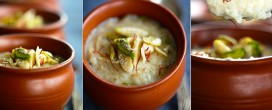
At first glance, the two desserts appear quite different. Shahi Tukra is generally prepared by frying bread in ghee until golden, then serving it with thickened, sweetened milk, often flavoured with cardamom and saffron. Depending on the regional or household recipe, the bread may also be dipped in sugar syrup.
Traditional British bread pudding and related baked bread desserts use bread soaked in a mixture of milk or cream, eggs, sugar and spices. Depending on the recipe, dried fruits may be added, and the mixture is baked until set, with a golden top and a soft, comforting centre.
Yet beneath these differences lies a shared idea: why waste bread when it can be transformed into something delicious?
In one kitchen, bread is fried in ghee, sweetened and crowned with rabri. In another, it is soaked in custard and baked. Both demonstrate how cooks have found ingenious ways to make use of leftover bread, stretch household ingredients and create memorable desserts.
I would not suggest that Shahi Tukra necessarily descended from British bread pudding, or vice versa. Similar dishes can develop independently when cultures work with comparable ingredients and face similar practical challenges. In other instances, culinary techniques genuinely travel through trade, migration and cultural exchange. The histories must be understood on their own terms.
What matters is appreciating both the common ingenuity and the individual character of each tradition.
Geography shapes what we eat
The ingredients used in a dish are often a reflection of the land and the people who cook it.
In India, milk has played an important role in traditional sweets for centuries. The patient reduction of milk into rabri or khoya creates a concentrated richness that is central to many festive desserts. Ghee, cardamom, saffron, almonds and pistachios contribute flavours that have become familiar in celebratory Indian cuisine.
In Britain, bread puddings and related baked desserts evolved within a different culinary environment. Bread, dairy, eggs and baking traditions shaped preparations that could make use of stale loaves and other household staples. Regional variations introduced their own combinations of dried fruits, spices and sweeteners.
Climate, geography and agricultural produce all influence what is available, what can be stored and which cooking methods become practical. Trade introduces new ingredients; migration carries recipes to new places; and local cooks adapt those recipes to suit their own circumstances.
Over generations, these adaptations become part of a region’s food identity.
This is how culinary traditions remain alive. A dish may travel, but it rarely remains exactly the same. It takes on the character of its new home, shaped by local ingredients, tastes and techniques.
Food has no borders, but every cuisine has its own identity. We can celebrate the similarities between Shahi Tukra and bread pudding without overlooking the distinct histories and traditions that make each special.
My culinary perspective: respecting the ingredient
As a restaurateur, chef and food writer, I have always believed that a great recipe does not necessarily require complicated ingredients. It requires understanding what each ingredient contributes.
For Shahi Tukra, the quality of the bread matters, but so does the way it is fried. The milk must be reduced patiently, rather than simply thickened with shortcuts, if one wants that traditional, creamy character. Cardamom should perfume the dessert rather than overpower it, and saffron is best used sparingly.
I also admire the ingenuity behind the recipe. Bread, an everyday staple, becomes a celebration dish through technique, patience and thoughtful presentation.
That transformation is one of the reasons I find Indian cuisine so fascinating. Across the country, cooks have turned simple ingredients into extraordinary preparations: grains into festive sweets, milk into elaborate desserts, and everyday vegetables into dishes worthy of a celebratory table.
The same ingenuity can be found in kitchens around the world. Different cultures may use different ingredients and techniques, but the instinct to create something wonderful from what is available is universal.
A simple Shahi Tukra recipe for your home
This version uses crisp, golden bread topped with reduced, cardamom-scented milk. It is approachable for a home cook while retaining the spirit of the traditional dessert.
Ingredients
For the bread
- 6 slices of white bread, preferably a day old
- Ghee, for shallow-frying
- 1 tablespoon chopped almonds
- 1 tablespoon chopped pistachios
For the rabri
- 1 litre full-fat milk
- 3–4 tablespoons sugar, or to taste
- 4 green cardamom pods, crushed, or ½ teaspoon cardamom powder
- A generous pinch of saffron strands
- 1 tablespoon chopped nuts, plus extra for garnish
Optional light sugar syrup
- ½ cup sugar
- ½ cup water
- 2 green cardamom pods
- A few drops of rose water
Method
1. Prepare the rabri.
Bring the milk to a gentle boil in a heavy-bottomed pan. Reduce the heat and simmer, stirring regularly and scraping the cream that forms along the sides back into the milk. Continue until the milk has reduced noticeably and developed a creamy consistency. Add the sugar, cardamom and saffron. Simmer for another few minutes, then set aside.
2. Fry the bread.
Remove the crusts if you prefer a neater presentation, then cut each slice into triangles. Heat ghee in a frying pan and fry the bread on both sides until crisp and golden brown. Drain on a plate.
3. Prepare the syrup, if using.
Combine the sugar, water and cardamom in a small saucepan. Simmer until the sugar dissolves and the syrup becomes lightly sticky. Stir in the rose water after removing it from the heat. Avoid making the syrup too thick.
4. Assemble the dessert.
For a crisp-edged Shahi Tukra, arrange the fried bread on a serving platter and spoon the rabri over it shortly before serving. For a more syrup-soaked version, briefly dip the fried bread in the light syrup first, then add the rabri. Do not leave the bread soaking for too long if you want to preserve some texture.
5. Garnish and serve.
Scatter the almonds and pistachios over the top and add a few saffron strands. Serve slightly warm or chilled, according to your preference.
My tips for the perfect Shahi Tukra
- Use full-fat milk for a richer rabri.
- Fry the bread until evenly golden, taking care not to burn it.
- Add the rabri shortly before serving if you prefer the bread to retain some crispness.
- Adjust the sugar to taste, especially if you are using syrup as well as sweetened rabri.
- For a festive presentation, arrange the triangles in a circle and finish with a delicate scattering of pistachios and saffron.
Food is a language shared by humanity
I find it fascinating that a simple ingredient such as bread can inspire so many different creations around the world. From India’s Shahi Tukra and Hyderabad’s Double Ka Meetha to European bread puddings, cooks have repeatedly discovered that yesterday’s bread can become today’s delicacy.
The same principle applies far beyond desserts. Rice, wheat, millet, maize and other staples have inspired countless dishes, each shaped by the climate, agricultural produce, traditions and tastes of the region in which it developed.
For me, this is the real beauty of culinary heritage. Preserving our food history does not mean building walls around it. It means understanding where our dishes come from, respecting their distinct identities and appreciating how food connects us to the wider world.
As someone deeply committed to celebrating Indian culinary heritage, I believe we should take pride in our traditional recipes while remaining curious about other cuisines. We can honour the uniqueness of Shahi Tukra and, at the same time, recognise the shared human ingenuity that finds expression in a British bread pudding or a dessert from another part of the world.
Food has no borders. Geography gives us our ingredients, culture gives us our techniques, and generations of cooks give us the imagination to transform them.
When these elements come together, a humble piece of bread can become a royal Indian dessert or a comforting Western pudding. Each has its own story, yet both remind us that creativity in the kitchen is a language understood across cultures.
And that, to me, is the real magic of food: it belongs to the culture that nurtures it, yet its ability to bring people together belongs to everyone.
— Monish Gujral
Restaurateur, chef, food writer and custodian of Indian culinary heritage