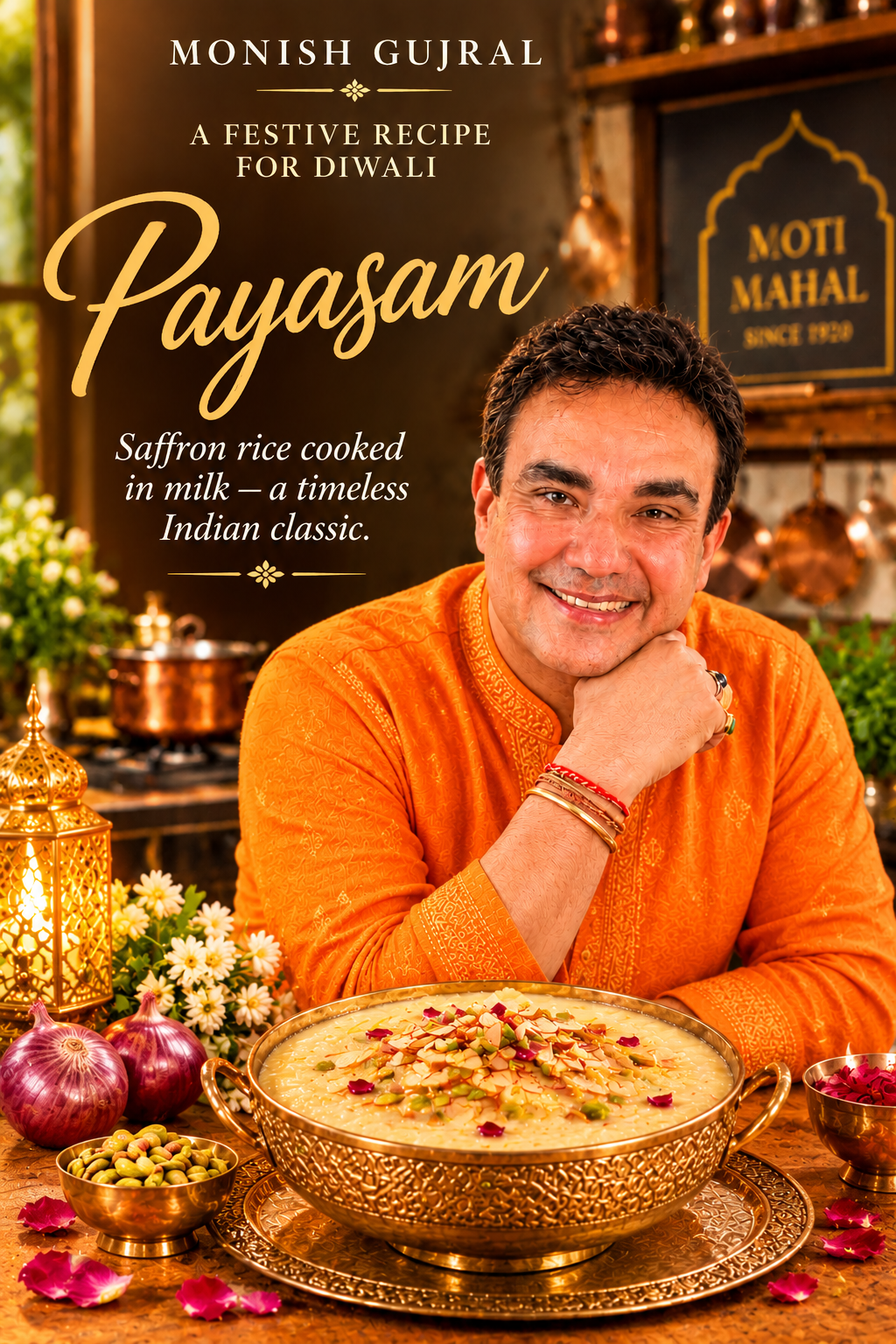
By Monish Gujral
When Ayodhya welcomed its beloved Ram
Diwali, or Deepawali, is perhaps one of the most beautiful celebrations in the Indian cultural calendar. A festival of lights, it symbolises the victory of good over evil, knowledge over ignorance and hope over despair.
For millions of Indians, Diwali commemorates the return of Lord Rama, Mata Sita and Lakshmana to Ayodhya after fourteen years of exile and Lord Rama’s victory over Ravana. According to the popular Ramayana tradition, the people of Ayodhya welcomed their beloved prince by lighting rows of earthen lamps, filling the kingdom with light and celebration.
I have always found this story deeply moving. Beyond the religious significance, it is a story about homecoming, family, righteousness and the triumph of good intentions.
Food, naturally, has always been an integral part of Indian celebrations. No festival is complete without preparing something sweet, sharing it with family and friends, and offering it first to the divine.
But have we ever wondered what sweet preparation is actually mentioned in the scriptures in connection with Lord Rama?
The sacred Payasam in the Valmiki Ramayana
While many popular stories associate particular sweets with Lord Rama, there is an interesting reference in the Bala Kanda of the Valmiki Ramayana.
King Dasharatha, deeply desirous of having children, performed the Putrakameshti Yagna. At the conclusion of the ritual, a divine being emerged from the sacrificial fire carrying a golden vessel containing a sacred preparation called Payasam.
The divine preparation was given to Dasharatha with instructions to distribute it among his queens. He shared it with Kausalya, Kaikeyi and Sumitra. After consuming the Payasam, the queens subsequently gave birth to Rama, Bharata, Lakshmana and Shatrughna.
The preparation is described as divine, blessed and nectar-like.
This is one of the most beautiful food references in our ancient literature. A simple preparation of milk and rice becomes part of the story of the birth of Lord Rama himself.
It is important to distinguish this scriptural reference from the popular claim that Payasam was Rama’s favourite sweet. The Ramayana establishes its sacred connection with his birth, but does not explicitly identify it as his favourite dessert.
I find this connection particularly meaningful during Diwali. If we are looking for a traditional Indian sweet with an authentic association with Shri Ram’s story, Payasam is a wonderful choice.
From Payasam to Kheer: India’s timeless love affair with milk and rice
Payasam is known by different names across India. In North India, we commonly call it Kheer; in Tamil Nadu and Kerala, Payasam is an integral part of festive meals; and in many other regions, it appears in different forms and with different ingredients.
The basic preparation remains beautifully simple: milk, rice and sugar, slowly cooked together until they develop a creamy consistency.
What makes this dessert fascinating is how every region has adapted it.
Some use jaggery instead of sugar, others add coconut milk, while many enrich it with saffron, cardamom, raisins, almonds and cashews. In eastern India, rice-based milk sweets have their own distinctive character, while southern Indian kitchens have developed an extraordinary variety of Payasams using lentils, vermicelli and jaggery.
This is another example of what I have always believed: food has no borders. A common ingredient becomes part of different culinary traditions, shaped by geography, local produce and the imagination of generations of cooks.
My culinary thoughts: The beauty of simplicity
As someone who has spent a lifetime exploring Indian cuisine and its heritage, I have always believed that the most memorable dishes are not necessarily the most complicated.
Kheer is a perfect example.
There are no elaborate techniques or exotic ingredients required. What it demands is patience. The milk must simmer gently, the rice must cook until tender, and the flavours must come together naturally.
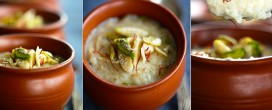
I particularly enjoy the traditional North Indian style of rice kheer, where milk is slowly reduced until it becomes thick and creamy. A little cardamom, a few saffron strands and a generous garnish of almonds and pistachios can turn this humble preparation into a festive delicacy.
During Diwali, I like the idea of returning to such traditional preparations. In an age when desserts are increasingly elaborate and commercially produced, there is something comforting about making a sweet at home, offering it as prasad and sharing it with loved ones.
After all, the sweetness of a festival lies as much in the act of sharing as it does in the dessert itself.
My Diwali recipe: Traditional Rice Payasam (Kheer)
This is a simple, traditional recipe inspired by the ancient milk-and-rice preparation, adapted for the modern home kitchen.
Ingredients
- 1 litre full-fat milk
- ¼ cup basmati rice or small-grain rice
- 5–6 tablespoons sugar, according to taste
- 4 green cardamom pods, powdered
- 8–10 almonds, blanched and slivered
- 8–10 cashews, chopped
- 1 tablespoon raisins
- A generous pinch of saffron
- 1 tablespoon ghee
- A few pistachios for garnish
Method
1. Prepare the rice
Wash the rice thoroughly and soak it for about 20 minutes. Drain and keep aside.
2. Boil the milk
Pour the milk into a heavy-bottomed pan and bring it to a gentle boil. Lower the flame and allow it to simmer, stirring occasionally so that it does not stick to the bottom.
3. Cook the rice
Add the soaked rice to the simmering milk. Cook on a low flame, stirring regularly, until the rice becomes soft and the milk thickens. This usually takes around 30–40 minutes, depending on the rice.
4. Add the sweetness and aroma
Add sugar, crushed cardamom and saffron. Continue cooking for another 5–7 minutes until the sugar dissolves and the flavours blend beautifully.
5. Prepare the nuts
Heat ghee in a small pan. Lightly fry the cashews, almonds and raisins until golden. Add them to the kheer.
6. Finish and serve
Pour the kheer into a serving bowl. Garnish with slivered pistachios and a few saffron strands.
It can be served warm or chilled. Personally, I enjoy it slightly chilled, when the flavours have had time to develop and the consistency becomes beautifully creamy.
My secret tips for perfect Kheer
- Use full-fat milk for a rich and creamy texture.
- Cook slowly rather than increasing the flame to save time.
- Stir frequently, scraping the sides of the pan to incorporate the milk solids.
- Do not add too much rice; the milk should remain the star of the preparation.
- If the kheer becomes too thick after refrigeration, loosen it with a little warm milk.
- For a more traditional festive flavour, use jaggery, but add it only after the milk-and-rice mixture has cooked and cooled slightly to avoid curdling.
Diwali: The sweetness of tradition
For me, Diwali is much more than a festival of lights and sweets. It is a celebration of our civilisational heritage, our family traditions and the stories that have travelled through generations.
The story of Lord Rama reminds us that righteousness, patience and courage ultimately prevail. The sacred Payasam mentioned in the Ramayana reminds us how food and faith have always been intertwined in Indian culture.
Perhaps this Diwali, instead of simply buying a box of sweets, we can revive the tradition of making a bowl of homemade Kheer or Payasam, offering it with devotion and sharing it with those we love.
Food has the extraordinary ability to preserve memories. A recipe passed down through generations is not merely a list of ingredients; it is a piece of our cultural history.
As I often say, Indian cuisine is not just about what we eat. It is about the stories, traditions and emotions that accompany every dish.
May this Diwali illuminate our homes with happiness, our hearts with compassion and our lives with the sweetness of togetherness.
Shubh Deepawali!
May the light of Shri Ram guide us towards truth, peace and righteousness.
— Monish Gujral
Restaurateur, chef, food writer and custodian of Indian culinary heritage